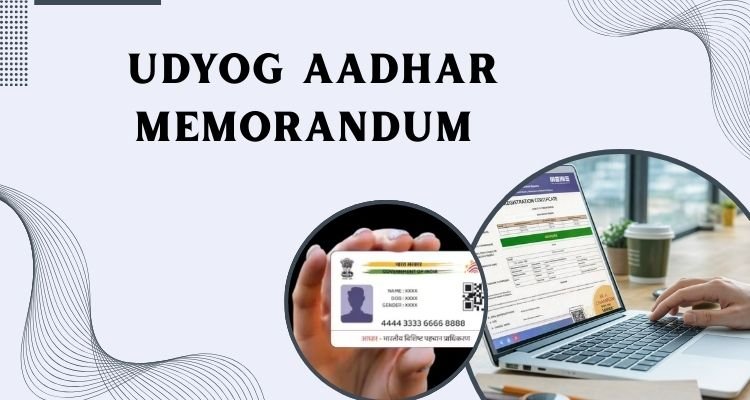
In September 2015, the Government of India launched the Udyog Aadhaar Memorandum (UAM), so that small businessmen of the country can get freedom from the burden of registration. Its main objective was to make the MSME registration process so simple that anyone can register their business sitting at home.
UAM completely abolished the old and cumbersome paperwork system and introduced an online and paperless registration model, which was based only on the Aadhaar number. This digital initiative not only increased transparency but also helped small industries save both time and money.
Through the UAM Certificate, it has become very easy for MSMEs to avail themselves of government benefits. The main benefits it provides to businesses are:
- Direct benefits of Government Schemes and Subsidies.
- Facility of bank loans without any hassle.
- Necessary financial support to survive in the market.
In a way, UAM gave official recognition to small businesses, which gave them the power to compete at a larger level and grow faster. Today, after upgrading the system, Udyam Registration has been banned.
Meaning and Background of Udyog Aadhaar Memorandum (UAM)
Somehow, in simple language, the Udyog Aadhaar Memorandum (UAM) was one such ‘self-declaration’ form which freed small traders from the old complicated system. Earlier, during EM-I/II, registration meant huge files and rounds of government offices, but UAM has eliminated the “Red Tape”.
Its main mantra was—”Less paperwork, more business.” Without uploading any document, just by filling in the information online through Aadhaar, one got instant registration. Here, the digital revolution is now even more advanced and is in front of us in the form of Udyam Registration.
Key Features of UAM (What made it special?)
- Aadhaar-based registration: Its biggest advantage was that it used the Aadhaar card as the primary basis for registration. The entrepreneur’s identity was verified using their Aadhaar number.
- Completely free: The government did not charge any fee for this process. This was a great relief for small businesses.
- Paperless and online: There was no need to upload any physical documents. A system-generated certificate was issued immediately after filling out the form.
Information Required for UAM Registration
You do not need to run around a lot for Udyam (Udyog Aadhaar) registration. This entire system works on self-declaration, meaning you do not have to upload any physical document.
Just keep these important details in mind before starting the registration:
- Personal Details
- Aadhaar Number: Aadhaar of Malik (Proprietor), Partner, or Director. Remember, Aadhaar should be linked to a mobile because OTP will be generated on it.
- PAN Number: PAN of the name of the business (if it is a Proprietorship, then the PAN of the owner will also be used).
- Business Details
- Business Name: The true name of your firm or shop.
- Type of Organisation: Is it a Sole Proprietorship, Partnership, or Private Limited?
- Main Activity: Do you do manufacturing or provide service? (Jaise: Halwai, Tailor, IT Consulting, etc.)
- NIC Code: In which category does your work fall (you can also search it on the portal).
- Bank and Address Details
- Bank Account: Account number and IFSC code.
- Business Address: Jahan aapka kaam hai hai, us jahan ka sahi pata, district aur state.
- Financial Figures (Paisa-Taka)
- Investment: How much money have you invested in your machine or equipment
- Turnover: How much were your total earnings (sales) last year? (These details are now automatically fetched from ITR).
Benefits of Udyog Aadhaar Memorandum: What did small businesses get?
UAM was not just a piece of paper; rather, it was the key to the closed doors of government facilities. Its major benefits were as follows:
- Loans without guarantee (Collateral Free Loans)
The biggest problem of the MSME sector is funding. For UAM holders, the government provided a loan facility without the mortgage of any property under the CGTMSE scheme.
- Concession in interest rates
UAM holders were given a discount of 1% to 1.5% in interest rates on business loans given by banks, which reduced the cost of business.
- Special place in government tenders
When the government floats a tender for the purchase of any good or service, MSME units are given preference. They are exempt from depositing the ‘Earnest Money Deposit’ (EMD) and also do not have to pay tender fees.
- Electricity and tax exemption
In many states, Udyog Aadhaar holders get a concession in electricity bills. Besides, they also get benefits under some Direct Tax laws.
The journey from Udyog Aadhaar to ‘Udyam Registration’
Technology changed with time, and the government decided to broaden the definition of MSME. From 1 July 2020, ‘Udyam Aadhaar’ was upgraded to ‘Udyam Registration’.
Current Status:
- All the old UAMs have now gradually lost their validity.
- The government has directed all old UAM holders to migrate their businesses to the new ‘Udyam Portal’.
- The new system is now directly linked with Income Tax (PAN) and GST data, making the data even more accurate.
Conclusion
Udyog Aadhaar Memorandum (UAM) has played a historic role in formalising the informal sector of India. It removed the fear of “government registration” from the minds of millions of small entrepreneurs and connected them to the main economic stream of the country. Even though it has now been replaced by ‘Udyam‘, the foundation laid by UAM will always remain important towards Digital India.
If you are starting your new business today, then you should directly register on the Udyam portal, which is a modern and simple form of UAM.